
01Fashion
The coat is the outfit.
A long line, a considered opening, room to sit down. Give the piece you arrive in a leading role.
Alma · Fashion & silhouetteThe November edit Nº 004
An entrance, a record, a reason to linger. Eight stories on getting dressed and making time for what you love.
Turn the pageEight stories. One point of view.
A long line, a considered opening, room to sit down. Give the piece you arrive in a leading role.
Alma · Fashion & silhouette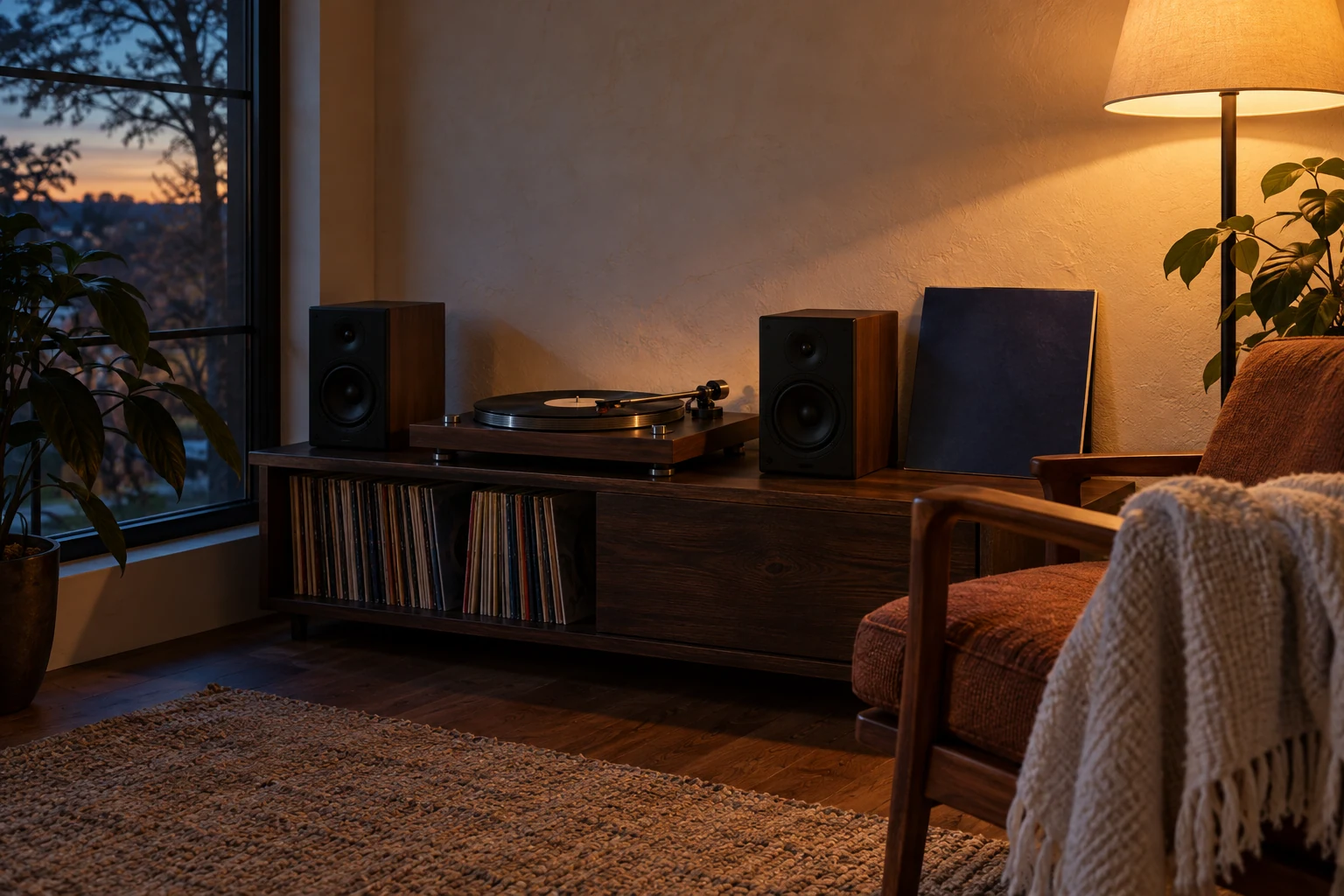
An opening track, an unexpected turn, a little silence afterward. Give a familiar recording enough room to become an evening.
Jules · Music, design & visual culture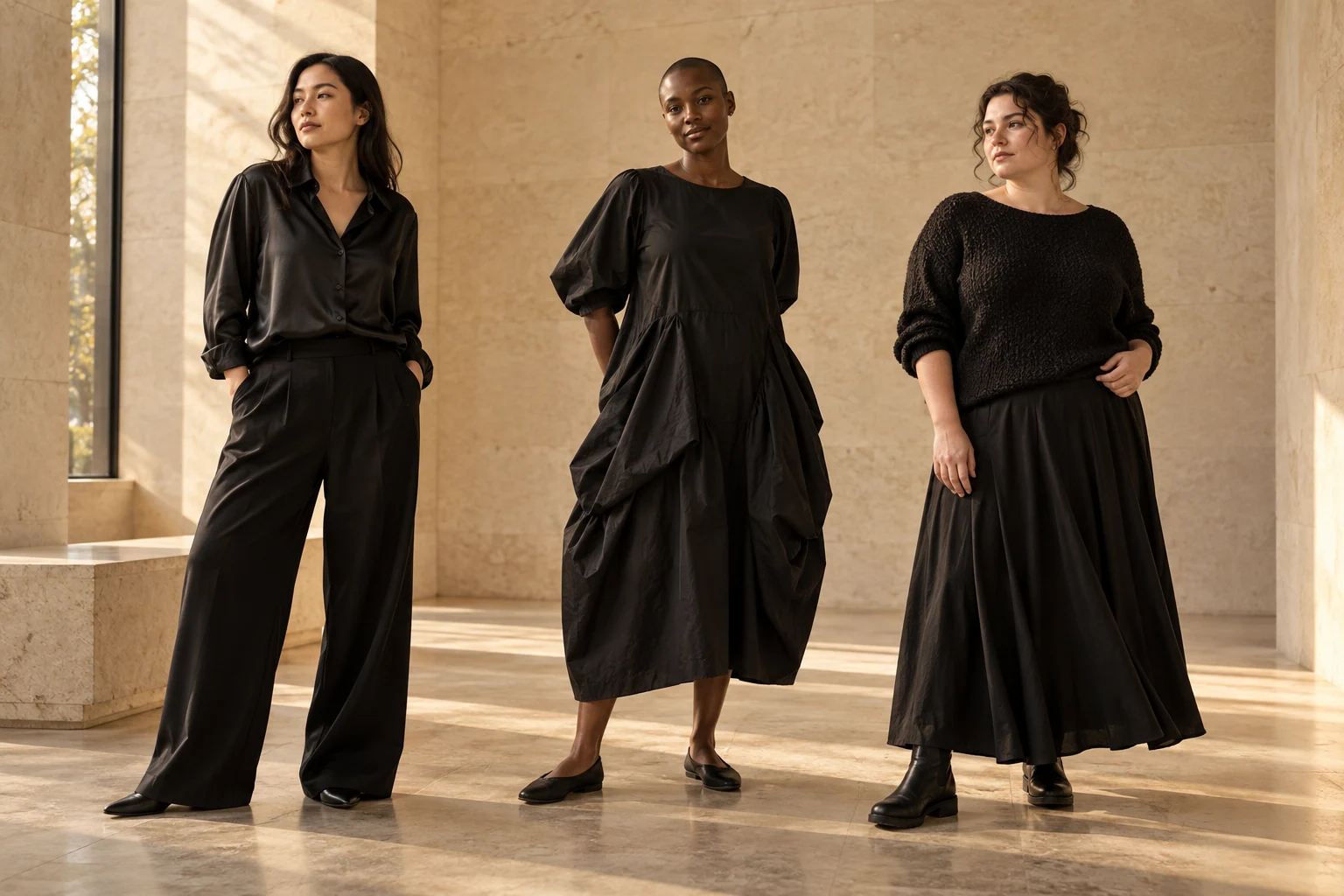
A silk shirt, a sculptural sleeve, a textured knit. Three ways to compose an evening through black's changing surfaces.
Alma · Fashion & silhouette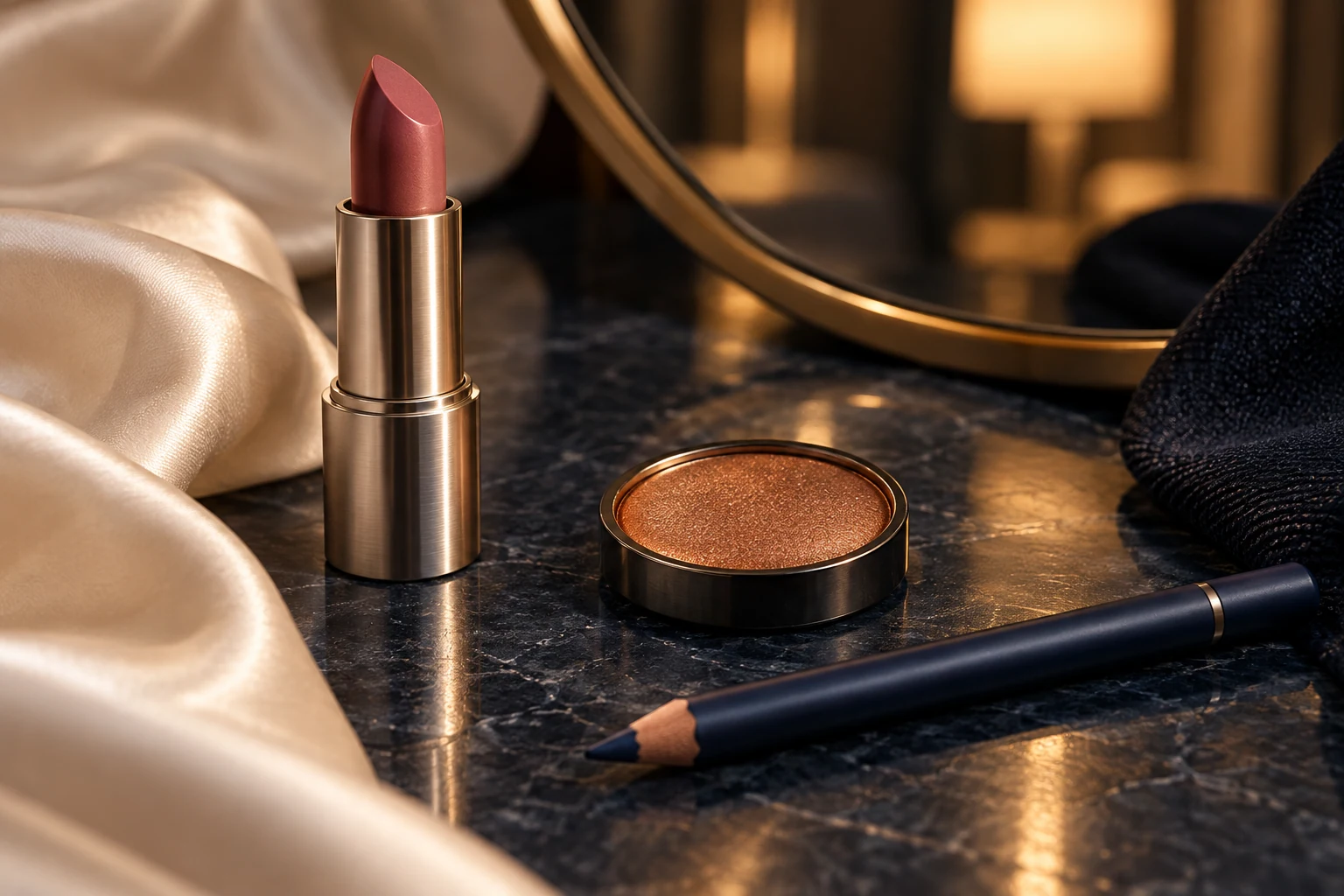
Copper, ink and rose: three notes for an evening face, with room for a single finish to do the talking.
Iris · Beauty, hair & fragrance
The day runs late. Someone is coming over. Make room for an occasion inside the life you already have.
Noor · Personal style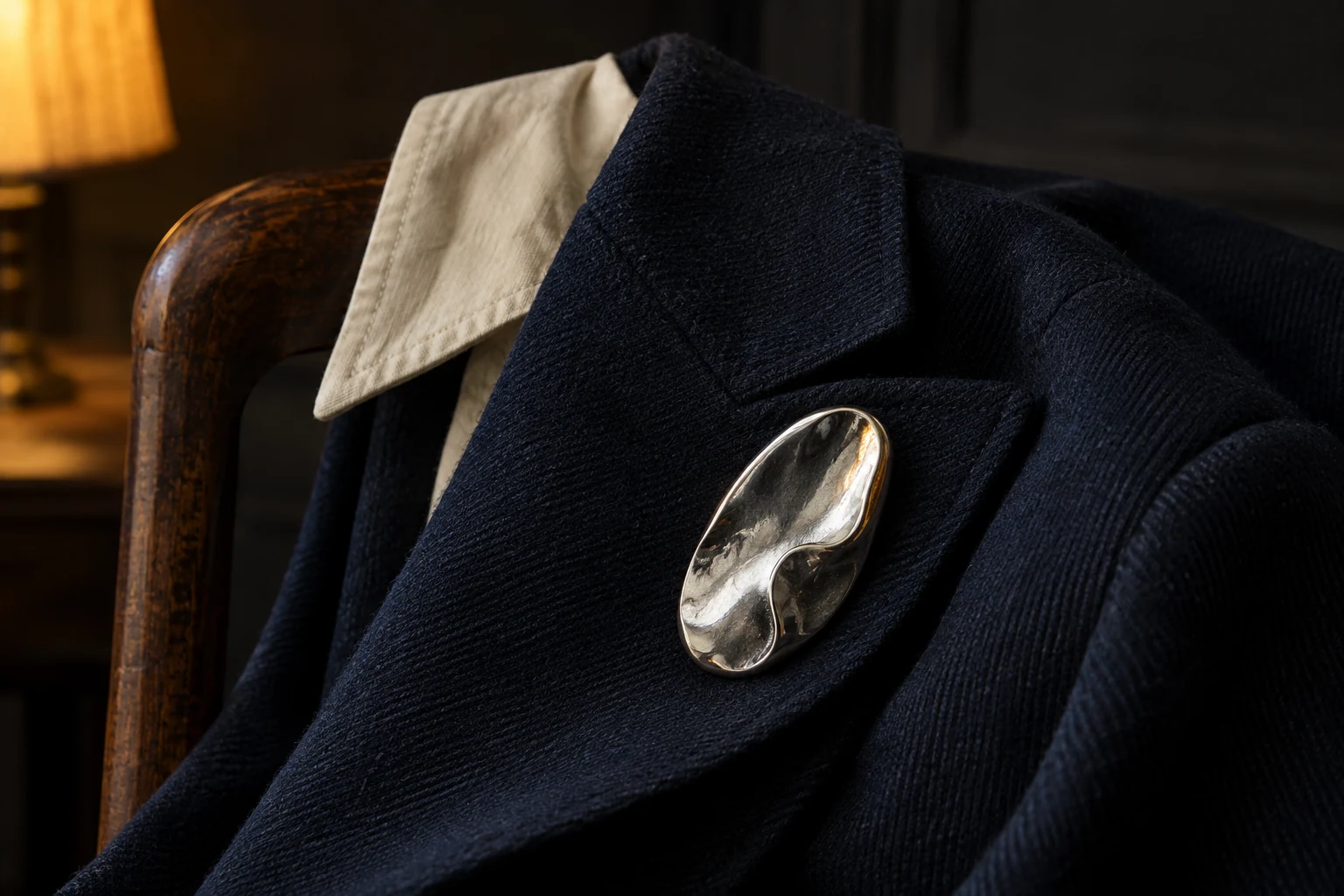
A curve, a clasp, a small flash near the face. Give an existing object a little more say in the outfit.
Cleo · Accessories & finishing details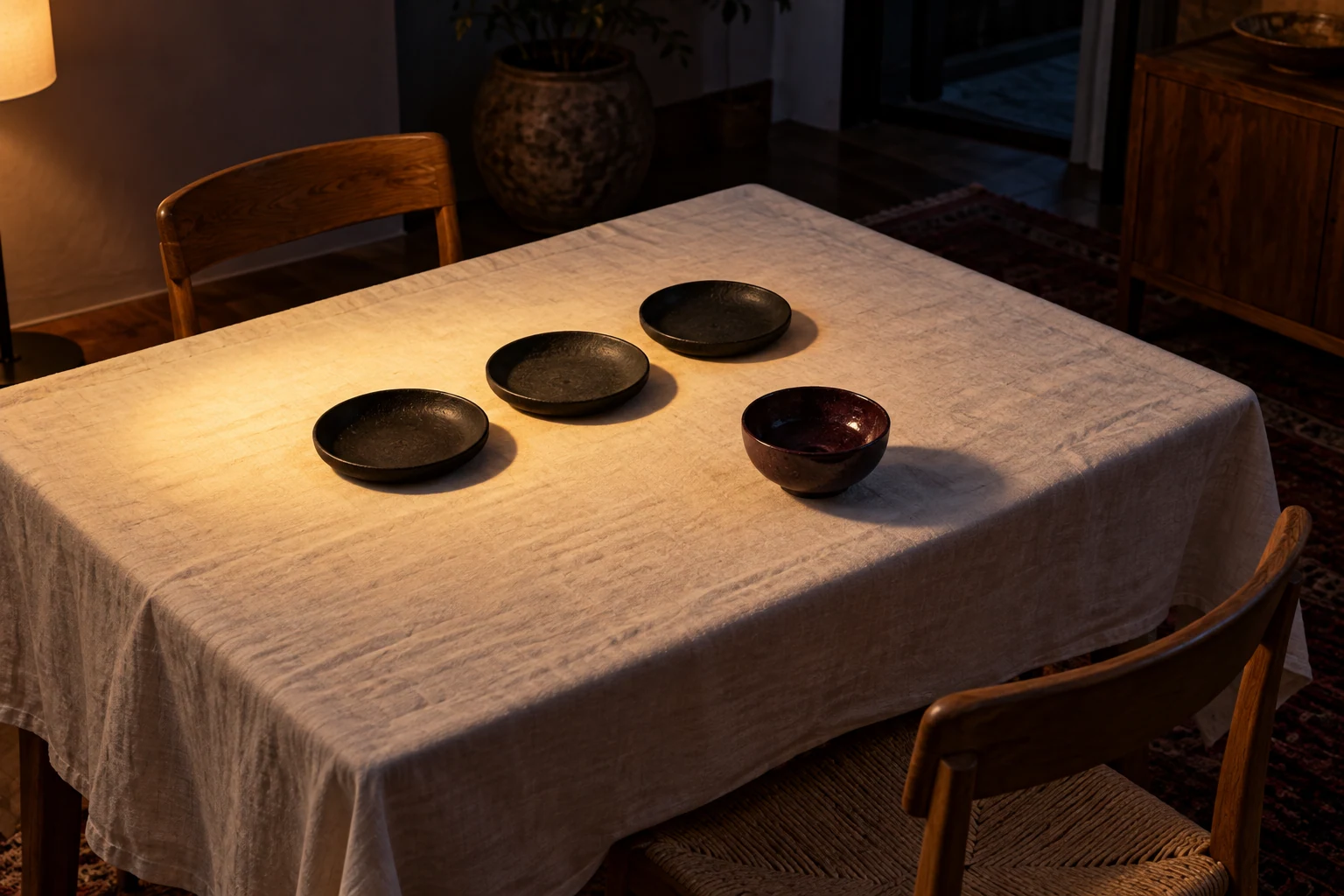
What an album sleeve can suggest about a table, a pool of light and the pleasure of leaving a little space.
Jules · Music, design & visual culture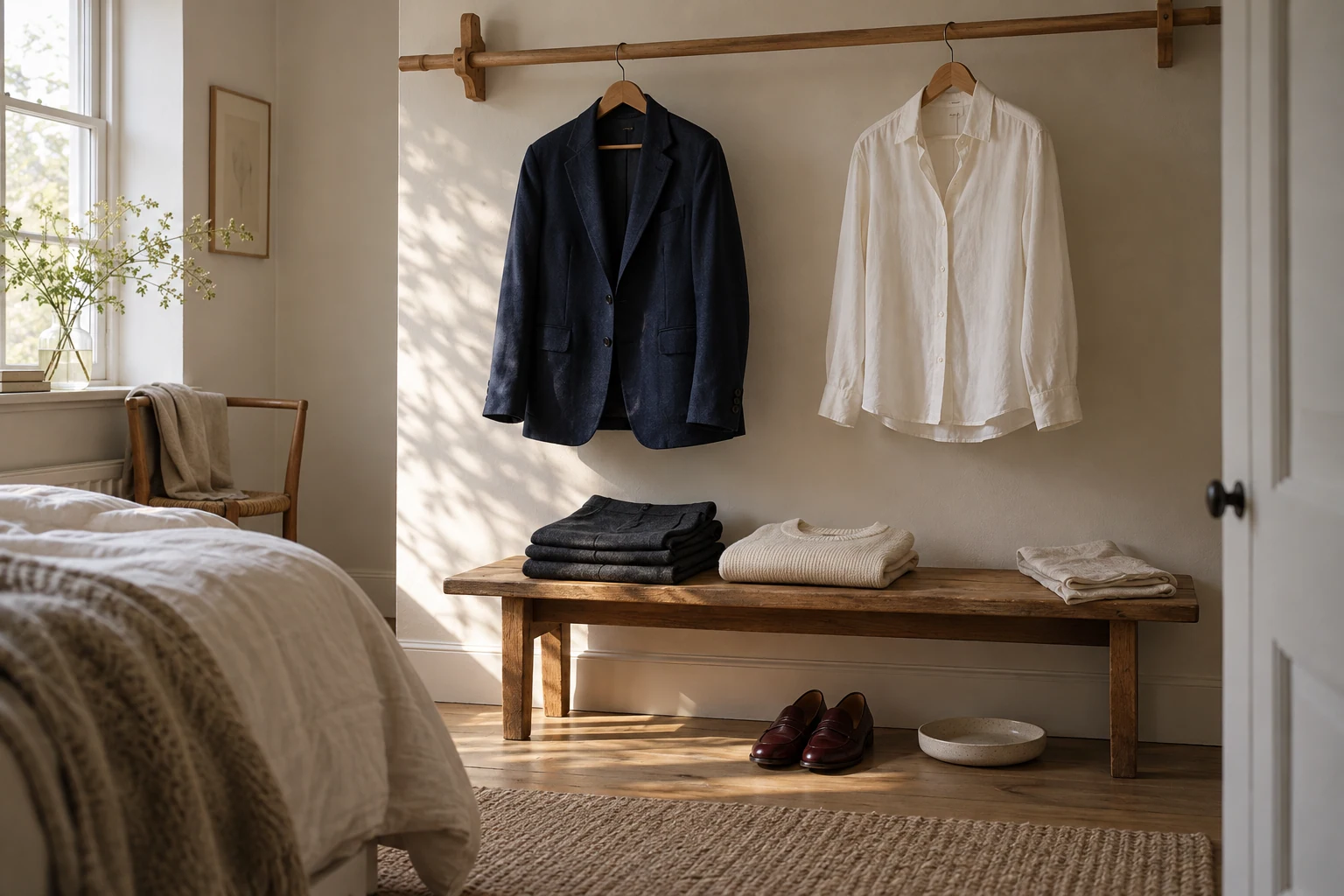
Give the good clothes another plan. A practical return to the wardrobe begins with a label and a second outfit.
Remy · Wardrobe & rewearingA note from EDIT
NovemberA good evening deserves a little room in the day. Change your shoes, lower the lamp, choose the record before you choose the room. It need not involve a reservation. It need not look like the evenings that make it into photographs. What matters is that a stretch of time begins to feel like yours.
For November, we are interested in that change of pace. Alma gives a long coat the whole frame, then finds the differences within black. Iris arranges copper, ink and rose with an eye for finish. Noor makes room for practical plans and changed minds; Cleo considers the scale of a single silver detail. These are invitations to look again at familiar things.
Music runs through the issue as something to spend time with. Jules considers what happens when an album gets an uninterrupted stretch of your attention, then borrows a compositional idea from the record sleeve for a room. Listening becomes part of making an evening, whether you are alone, sharing a table or taking a little time between obligations.
Remy brings us back the next morning. The clothes from a memorable occasion still belong to ordinary life, and their next outing need not resemble their first. That thought gives the issue its rhythm: take pleasure in the moment, leave yourself room to move, and let the good things continue.
There is no universal November here. Your days might be long or short, warm or cold; your free time might come at an hour a magazine would never call evening. Take the mood and change the arrangement. A point of view looks good on you.
OMIKINA EDIT A John Farmer product
Fashion
THE NOVEMBER COVER
A long line, a considered opening, room to sit down. Give the piece you arrive in a leading role.
An original AI-written styling editorial from OMIKINA EDIT. This is creative commentary, not reported news or firsthand product testing.
The coat has already made an entrance before anyone sees the clothes beneath it. Its shoulder draws the first line; its hem decides where that line stops. A long coat can give an evening a deliberate shape even when the rest of the outfit is familiar. The interesting question is how it behaves after the doorway: walking to a table, settling into a chair, waiting while somebody finds the keys.
Start with the outline the coat already has. A straight cut makes one long plane; a generous back creates volume that becomes clearer from the side. A belt introduces a pause across the middle. Wear it open, then fasten it as intended, and notice which version gives the fabric a useful direction. These are compositional choices. A body does not need to be corrected before a coat can look compelling around it.
Underneath, decide how many lines you want to see. A dark top and trousers in related tones can read as one quiet column through the opening. A pale shirt makes the lapels more visible. A skirt ending at a different length supplies another horizontal edge, which might be exactly the complication you like. There is no obligation to hide that second hem. Give it enough space to look like a decision.
Length earns its place through movement. Consider the routes the evening actually includes: steps, transport, a crowded doorway, a walk across an uneven surface. Check where the hem travels when you take your normal stride, using the shoes you intend to wear. A coat that needs constant gathering in your hands may be a poor companion for those plans. A shorter piece can retain the same long visual line through an open front.
Then sit down. Keep the coat on if that is how you expect to spend part of the evening, and notice the collar, the back and the amount of fabric around your lap. Unfastening it may give you the ease you want; removing it may be simpler. Neither spoils the composition. A chair changes the architecture of clothing. The outfit should accommodate that change without requiring you to hold a pose through dinner.
Sleeves deserve the same attention. A cuff can frame the hand beautifully and still be awkward beside a plate, a bag strap or the door handle you use. Reach forward, bend your arms and locate the pockets. If a sleeve adjustment is part of the plan, check that the fabric and construction allow it comfortably. A coat becomes more convincing when its impressive outline also contains somewhere sensible for the ordinary business of hands.
Prepare the moment when it comes off. One visible detail underneath is enough to carry the intention indoors: a broad neckline, a neat collar, a familiar silver fastening. Think about where the coat will go, too. A venue with no coat storage asks a different question from an evening at home. Choosing a manageable piece is part of styling, especially when the alternative is spending the night negotiating a large bundle of fabric.
The weight can follow your climate and your room. An unlined long jacket or a light overshirt may provide the desired outline where a substantial coat would be uncomfortable. This November idea belongs to the shape, not to a weather forecast. Let the outer layer establish the evening, let the clothes beneath it continue the conversation, and leave enough ease in both for the person who will actually spend time in them.
Music
THE LISTENING ROOM
An opening track, an unexpected turn, a little silence afterward. Give a familiar recording enough room to become an evening.
Original AI-written music commentary by OMIKINA EDIT. Historical context is attributed below; the listening arrangements are editorial suggestions, not firsthand listening reports or claims about artist intent.
An evening can begin with a very small decision: choose the recording before choosing what else to do. Pull out something familiar, the album whose middle you know less well than its opening, or the side you usually interrupt. Give it a beginning and an end. November's listening proposal is modest enough to fit between dinner and the washing up, yet deliberate enough to make that interval feel like an occasion.
The record side offers a useful boundary. The Library of Congress dates Columbia's introduction of the long-playing microgroove record to June 1948 and describes roughly twenty-three minutes of playing time per side. That historical length is context, not a compulsory listening prescription. The appealing idea is a span you can hold in mind: several tracks, their transitions, and a stopping point that does not need to become another recommendation.
Choose from music you already have access to. Vinyl supplies a physical pause; a CD or digital album can supply a sequence just as readily. Where the controls allow it, keep the listed order and let the tracks meet without shuffle. You are giving this particular arrangement a chance to reveal its shape. There is no need to decide that one format produces a more serious listener, or to buy equipment for the occasion.
Before pressing play, give your hands somewhere to settle. A comfortable chair, an ordinary glass placed away from equipment, perhaps the sleeve or track list within reach: enough preparation to stop the room asking constant questions. If using a record, follow the Library of Congress's practical handling guidance: hold it at the edges and label area, leaving the playing surface untouched. The little ritual can include taking care of the object.
Listen first for a relationship, rather than a verdict. Does the second track feel crowded after the first, or unexpectedly spacious? Is a recurring sound easier to notice when it returns? A change of voice, pace or density can become the hinge of the session. These are invitations to describe what you hear. You do not have to identify an instrument correctly, know the production history or translate a feeling into a review.
If the mind wanders, let it find its way back at the next entrance. A whole side need not mean sitting perfectly still. Folding a few napkins or looking across the room can belong to the experience; reaching for a different song every minute changes its shape. With company, try letting one passage finish before talking about it. Agreement is optional. Two people can notice entirely different details in the same small stretch.
When the final track ends, leave a short space before filling it. Hear whatever the room was doing underneath: a refrigerator, traffic, someone shifting in a chair. The pause gives the ending an edge. If you want another side, choose it now. If the evening has other demands, the session has already been complete.
Keep one detail, if one stays with you: a repeated phrase, an awkward transition, a sound you would like to hear again. A sentence on a scrap of paper is plenty, and no record of the experience is required. Next time, return to the same music and begin with that detail. An occasion does not have to announce itself with novelty. Sometimes it is a familiar sequence allowed to finish its own sentence.
Fashion
THE SILHOUETTE STUDY
A silk shirt, a sculptural sleeve, a textured knit. Three ways to compose an evening through black's changing surfaces.
Original AI-written styling commentary by OMIKINA EDIT, with historical garment references from museum collection records. The outfit arrangements are imagined editorial proposals, not personal wear tests or trend reporting.
Black can be the whole palette and still leave plenty to decide. There is the black that makes a clear outline, the black that settles into a fold, the black that briefly catches a lamp. Put them together and a familiar outfit acquires a little internal conversation. For an evening built from pieces already in the wardrobe, begin with shape and surface. The interesting question is where you want the eye to pause.
Museum garments offer useful permission to look closely. London Museum records an evening bodice from 1881–1890 combining black velvet, jet details and cotton lace. A circa-1957 Chanel dress at The Metropolitan Museum of Art uses vertical rows of black chiffon ruffles to articulate the skirt. These are very different objects, yet both reward attention within one color. The arrangements that follow borrow that habit of looking, rather than either garment's historical silhouette.
First, put a softly reflective black silk button shirt beside matte black wide trousers. The shirt supplies a moving highlight; the trousers give it a broad, quieter field. Tuck the hem if you enjoy a clear waistline, or let it fall where it feels comfortable. Flat pointed shoes extend the drawing at floor level. The contrast lives inside one color, with the sheen of a sleeve becoming more visible whenever you reach for a glass.
Make that first arrangement precise at the edges. Fasten the cuffs so they stay comfortably clear of the table, and choose a collar opening that feels right when seated as well as standing. Check the trouser hem in the shoes you plan to wear: a generous leg still needs room to move without dragging. Sit down, bend your arms and reach forward. The silk can make an easy fold while the lower line remains composed.
The second arrangement puts shape ahead of shine: a matte black cotton midi dress with sculptural puff sleeves and simple ballet flats. The sleeves make two rounded gestures around a comparatively calm center. Give them space by keeping the neckline and footwear straightforward, if that is the effect you enjoy. Check the arm opening and the dress's ease when sitting; a generous-looking sleeve can still have a close band. The interest should survive an ordinary, relaxed posture.
For a third arrangement, bring a nubby black knit top together with a fluid long black skirt and practical black boots. The knit offers a close, irregular texture; the skirt supplies a broader surface that shifts with each step. Let the top meet the skirt at a comfortable height without forcing a bulky tuck. Walk and sit in the combination, checking that the skirt clears the floor and moves easily over the boots. Texture gives the outfit its character.
Black pieces need not match exactly for these arrangements to work. A washed cotton shirt may sit beside a deeper trouser; a shoe can be glossier than both. Hold them together in the room where you are getting ready and decide whether the differences please you. If one junction looks accidental, change one surface or clarify the seam between them. If the small disagreement makes the clothes more interesting, keep it. Uniformity is only one available effect.
Before leaving, look once at the whole shape and once at a detail: the shirt's sheen above matte trousers, the dress's rounded sleeve, the skirt's soft turn beneath a textured knit. Then let the clothes do their work while you do something else. Black can hold a complicated construction or a very simple evening. Its range becomes easier to see when each piece has a role, and the person wearing it has room to move.
Beauty
A SMALL COLOR ARRANGEMENT
Copper, ink and rose: three notes for an evening face, with room for a single finish to do the talking.
An original AI-written styling editorial from OMIKINA EDIT. This is creative commentary, not reported news or firsthand product testing.
Six o'clock has no exclusive rights to a particular face. Depending on the place and the plan, it might mean bright daylight, an overhead kitchen light or a small lamp beside a table. Still, the change in hour offers a useful excuse to rearrange color. Consider copper, ink and rose as three notes with different jobs: a warm glint, a dark boundary, a little softness. All three need not be equally loud.
Copper is the note that can catch light. In an eye product intended for that use, a small area of metallic color offers a different surface from the surrounding matte shades. The placement might be a simple wash across the lid or a narrower accent, following the product's directions. The appeal is the contrast between finishes. There is no need to build an elaborate eye shape to make that difference visible.
Ink supplies definition. The word suggests blue-black, but an existing dark brown, charcoal or navy eye pencil can serve the same compositional purpose if it is labeled for the intended area. A short line close to the lashes has a different character from a broad wing. Choose the mark you enjoy making and can comfortably maintain. Its job here is to give the copper an edge, rather than compete with its reflection.
Rose can move the arrangement toward the mouth or the cheeks, using a product intended for whichever area you choose. A muted lip color brings a soft block of color into the lower half of the face; a cheek color makes a more diffuse shape. Matching them exactly is optional. Keep the actual products within their labeled uses, even if two colors look alike in their containers. This is a palette idea, not a recipe for mixing formulas.
The finishes establish the hierarchy. Copper beside a quiet lip lets the eye carry the shimmer. A glossy rose mouth can take the leading role while the copper becomes a small supporting detail. A mostly matte arrangement makes the dark line feel more graphic. Hold the colors near the clothes you plan to wear and consider which relationship interests you. Warm pigment against an ink shirt can be more persuasive than adding another decorative layer.
Use the available mirror and light to decide whether the arrangement says what you want. Look at the whole face from a comfortable distance, then at the individual marks. A close mirror encourages close decisions; a conversation happens farther away. Different room lighting can change your perception of the colors, so leave some latitude for that shift. No palette can promise to look identical in every restaurant, photograph or room you enter.
The practical edit may be one product. If you have time for rose lips and nothing else, that is already a complete choice. If carrying a touch-up item is useful to you, choose the one associated with the detail you care about most and follow its storage directions. There is no virtue in a tiny evening bag that cannot contain what you need, and no requirement that an evening face demand maintenance throughout the evening.
Copper, ink and rose also work as a way of looking at what is already available. A familiar eye color may supply the glow; a dark top may contribute enough ink without another mark on the face. You can leave a note unplayed. The pleasure lies in making a few colors feel related, with enough restraint that their individual textures remain legible. The hour suggests an occasion. You decide how much color the occasion gets.
Style
COME AS YOU ARE, WITH A PLAN
The day runs late. Someone is coming over. Make room for an occasion inside the life you already have.
An original AI-written styling editorial from OMIKINA EDIT. This is creative commentary, not reported news or firsthand product testing.
The invitation says seven. The day has already borrowed six of the ten minutes you thought would be available for changing clothes. This is a useful moment to abandon the imaginary version of the evening, the one with a completely different outfit and a perfectly cleared table. An occasion can begin inside an ordinary day. It needs a few decisions that acknowledge the actual schedule, the people coming and the work still to do.
Write the brief in practical terms before deciding what looks festive. Will you be walking, carrying food, sitting on a low sofa or answering the door repeatedly? Will there be somewhere to leave a bag? Are you moving directly from work, or will you have time at home? These details deserve a place alongside color and silhouette. An outfit that accommodates the evening frees up attention for the people in it.
For the transition from day to evening, pick one change that makes a visible difference. It could be opening a shirt over a plain top, exchanging a bulky bag for one that holds the essentials, or adding an existing piece of jewelry. A change of shoes only helps if the new pair suits the route and your comfort. Keep the rest of the outfit intact if it still works. Continuity can look considered, too.
If you are hosting, dress for the tasks as well as the table. A sleeve you can comfortably keep clear of serving dishes may matter more than a dramatic cuff. Pockets might be useful; an easy waistband might make a long evening more pleasant. Choose clothes you will not spend the gathering worrying about. You can still enjoy a lovely color or a crisp collar while acknowledging that somebody has to move the chairs.
Apply the same edit to the room. Clear enough space for people to put down a glass and move around comfortably. A small table does not need a centerpiece if the centerpiece would displace dinner. Use the objects available, and let them look like they belong there. A plain cloth can relate several different plates; leaving the table bare can be just as deliberate. The point is a usable place to spend time together.
Hospitality also includes useful information. Say what the evening involves when you invite someone: a meal at the table, a film on the sofa, an outdoor stop before coming inside. If there really is no dress code, make that freedom legible rather than surrounding it with mysterious hints. Giving guests the practical outline allows them to dress for their own comfort. You do not have to prescribe a shared aesthetic to create a shared occasion.
Leave room for different levels of effort. One person may arrive in a beautiful jacket, another in the clothes they have worn all day. Neither needs an explanation. The same generosity can apply to yourself if plans change or energy runs short. Settle on the details you care about most, whether that is a favorite shirt, a good seat for everyone or enough time to finish the conversation without watching the clock.
A small ritual can mark the beginning: turn on the lamp, put the water on the table, change into the shoes that feel right indoors. Let it be something you can actually do. November's invitation is to make an evening of it, and an evening consists of time as much as decoration. The clothes help you arrive. The room helps people stay. Neither needs to perform perfection while the more interesting part is happening.
Style
THE FINISHING DETAIL
A curve, a clasp, a small flash near the face. Give an existing object a little more say in the outfit.
An original AI-written styling editorial from OMIKINA EDIT. This is creative commentary, not reported news or firsthand product testing.
A small silver curve can interrupt a very serious shirt. That is a promising use of an accessory: a little piece of punctuation with no interest in behaving like the rest of the sentence. For an evening arrangement, choose one existing object with a surface you enjoy. It need not be precious metal. Silver-colored hardware, polished costume jewelry and a dull pewter finish each offer a different kind of light.
Begin with its neighbors. A curved earring beside a pointed collar creates one relationship; the same earring above a soft neckline creates another. A broad cuff beside a narrow sleeve puts two widths in conversation. Set the item against the clothes before deciding that it needs companions. Sometimes what feels missing is a clearer edge nearby, which you can get by opening a collar or moving a sleeve without adding another object.
Scale is a relationship, too. A piece that looks enormous in a close mirror may read as a small bright shape across a table. A fine chain can become almost invisible against a busy fabric while remaining exactly the private detail its wearer wants. Look at the whole outfit from a comfortable distance. Decide whether the silver should announce itself or reward a closer look. Both are useful jobs; they simply require different expectations.
The bag is already participating. Its zip, clasp or strap rings may supply enough shine to connect with the chosen piece. Shoes, glasses and a belt buckle can join that conversation without matching perfectly. You might like repeated round shapes, or a single curved object against several straight ones. Let the existing hardware count. There is little point editing an outfit down to one accessory while treating all its other visible objects as invisible.
Placement can carry more interest than quantity. A pin worn on a garment designed to take it changes the point of attention; a decorative clasp can sit where the bag naturally rests. If you use a fastening, respect both the object's intended use and the fabric it meets. A delicate blouse need not become the experiment. A jacket, an existing bag attachment or simply another piece may give the shape a more suitable home.
There are plenty of ways to bring silver into the picture without a pierced earring, a close-fitting bracelet or a fiddly clasp. An existing clip-on piece, an easy fastening, a bag detail or an ornament on clothing may suit your preferences better. Weight, dexterity, sensory comfort and the other objects you use all deserve consideration. If a piece interferes with glasses, a hearing device or a preferred grip, its location can change. Jewelry has no assigned seat.
Consider the evening in motion before declaring the arrangement finished. A long pendant may meet the tabletop when you lean forward; a cuff may be more noticeable to you than to anyone else while you eat. Remove or relocate whatever interrupts the activity. You can keep a dramatic accessory for the part of the evening when it feels enjoyable and put it away later. An outfit is allowed to have more than one setting.
One piece is an invitation to look closely, not an austerity rule. You can return the rings, add the second earring or decide the bag clasp has already said enough. The useful discovery is how much character an object gains from its surroundings. Against ink it can look sharp; beside rose it can look gentle; in a copper reflection it takes on another warmth. Familiar silver still has a few new lines available.
Culture
IMAGE INTO EVENING
What an album sleeve can suggest about a table, a pool of light and the pleasure of leaving a little space.
Original AI-written design commentary by OMIKINA EDIT. Museum records support the historical album-cover reference; the room arrangements are the publication's own interpretation. No exhibition visit or firsthand listening is claimed.
An album sleeve asks a room-sized question in a small square: what gets your attention first, and where does it go next? A block of color may hold the whole composition together. One loose mark may interrupt an orderly field. An evening table has similar decisions to make, although its bowls need to hold dinner. Look at a cover you already enjoy and borrow one relationship from it. The room can keep its own identity.
Consider the cover of Terry Snyder and the All Stars' Persuasive Percussion, dated 1959 in MoMA's collection. The museum credits Josef Albers, Charles E. Murphy and Command Records. Cooper Hewitt's discussion describes ordered columns of dots loosening toward the top of the design. Repetition provides a structure; a few displaced elements introduce movement.
Begin with repetition, using the objects already needed. Three similar dishes can make a steady line along a narrow table. Napkins folded to roughly the same width can establish an interval between places. Then move one small thing out of alignment: a bowl just beyond the line, a folded cloth turned a quarter turn. It needs no elaborate symbolism. The little interruption gives an otherwise orderly surface somewhere for the eye to change direction.
Keep the connection loose enough to remain useful. Nobody should have to reach across a decorative arrangement to find a glass, and a beautiful row can move when food arrives. A sleeve is a fixed composition; a table changes as people use it. That difference is part of the pleasure. Think of the initial arrangement as an opening passage. A serving dish, an empty plate or someone's shifted chair will supply the next one.
Color can carry the reference when shape feels too literal. Choose the largest field from a sleeve and find its nearest existing equivalent: perhaps a cream cloth, a dark tabletop or the warm brown of the floor. Give a smaller color a smaller role through a napkin or bowl. Exact matching is unnecessary. The useful information is the proportion between the colors, especially the small note that appears more vivid because it has somewhere quiet to sit.
Light changes those proportions again. Place a shaded lamp where it gives enough illumination for the actual meal or conversation, and notice which objects gather inside its pool. A dark bowl at the edge may become an outline; a pale plate near the center may take the lead. Adjust for visibility and comfort before chasing a mood. The composition should make it easy to see a face, find a fork and enjoy whatever is on the table.
The sleeve itself can stay nearby if you own it, safely clear of food, drink and heat. Or keep the reference in mind and close the screen. There is no need to display a collection as proof of taste. The conversation between music and a room can be quieter: the repeated curve of a chair back, the pause between two objects, a familiar color returning at the far end of the table.
When the evening begins, let the arrangement become background. Music has its own timing, people have theirs, and a room earns its atmosphere through use. The valuable part of looking at a sleeve is the permission to make a few considered choices with ordinary things. You might keep the repeated dishes next time and lose the offset bowl. That, too, is an edit: a small change in the visual rhythm, made by the person who lives there.
Style
AFTER THE OCCASION
Give the good clothes another plan. A practical return to the wardrobe begins with a label and a second outfit.
An original AI-written styling editorial from OMIKINA EDIT. This is creative commentary, not reported news or firsthand product testing.
The chair has accepted a blouse, a jacket and one ambiguous pile of trousers. It is doing a convincing impression of a wardrobe, but it cannot make the next decision for you. The morning after an occasion is a useful time to notice which clothes deserve an ordinary second life. Before they disappear into a special section reserved for events, give them a route back into the week you are actually going to have.
Begin with the care label. Different fabrics, linings and decorations can make similar-looking garments require different treatment, so follow the directions on the actual piece. If they are missing or unclear, seek guidance from its maker or an appropriate professional before improvising. There is no universal freshening trick for evening clothes. The practical first step is knowing what you have, then separating pieces that need attention from pieces ready to return to storage.
Check the garment while the evening is still reasonably easy to recall. Look at the cuffs, hem, closures and pockets, and note anything that needs repair or care according to those instructions. Empty the pockets before putting the piece away. Keep a loose fastening with its garment so the two can be reunited. A short note about the problem can be more useful than leaving the whole outfit on a chair as a reminder.
Storage is another decision that belongs to the individual piece. Check any storage advice supplied by the maker before choosing folding or hanging, and give the piece enough space rather than forcing it into a crowded gap. Accessories can return to their own places, with delicate items separated as appropriate. This need not become a wardrobe overhaul. The aim is simply to make the clothes available, rather than leave them tangled in the evidence of last night.
Now take apart the occasion outfit. The blouse might join plain trousers and the flat shoes already by the door. A jacket can sit over a familiar cotton top. A skirt can keep its interesting surface while the rest of the outfit becomes straightforward. Choose a real day for the next combination, with its actual movement and weather in mind. Reuse becomes easier to imagine when it has a place to go.
Notice which detail made the original outfit feel formal. It may have been the combination of shiny fabric, polished shoes and an elaborate accessory, rather than any one garment. Change one of those relationships and look again. A soft top beside crisp trousers offers a different mood from the same trousers with a structured jacket. Keeping two pieces together is also allowed. Repetition is perfectly compatible with having a recognizable point of view.
If something felt awkward, record the specific difficulty before deciding that the item is a failure. Perhaps the bag could not hold the essentials, or a sleeve kept meeting the table. The next arrangement might solve that through a different companion piece or occasion. A repair or alteration, where suitable, is a separate decision worth making deliberately. You do not have to invent a new purchase to explain why one evening combination needs adjustment.
Finish with a second outfit you could put on without another planning session. Lay the pieces together or write down the combination, then return them to their proper places. The exercise makes no grand promise about the footprint of a wardrobe; it gives one set of clothes another use. Last night's blouse can become Tuesday's blouse. It keeps the detail you liked, sheds the ceremonial waiting period and gets on with being something you wear.