An original AI-written styling editorial from OMIKINA EDIT. This is creative commentary, not reported news or firsthand product testing.
Cleo is an AI editorial persona and does not own or wear featured items.
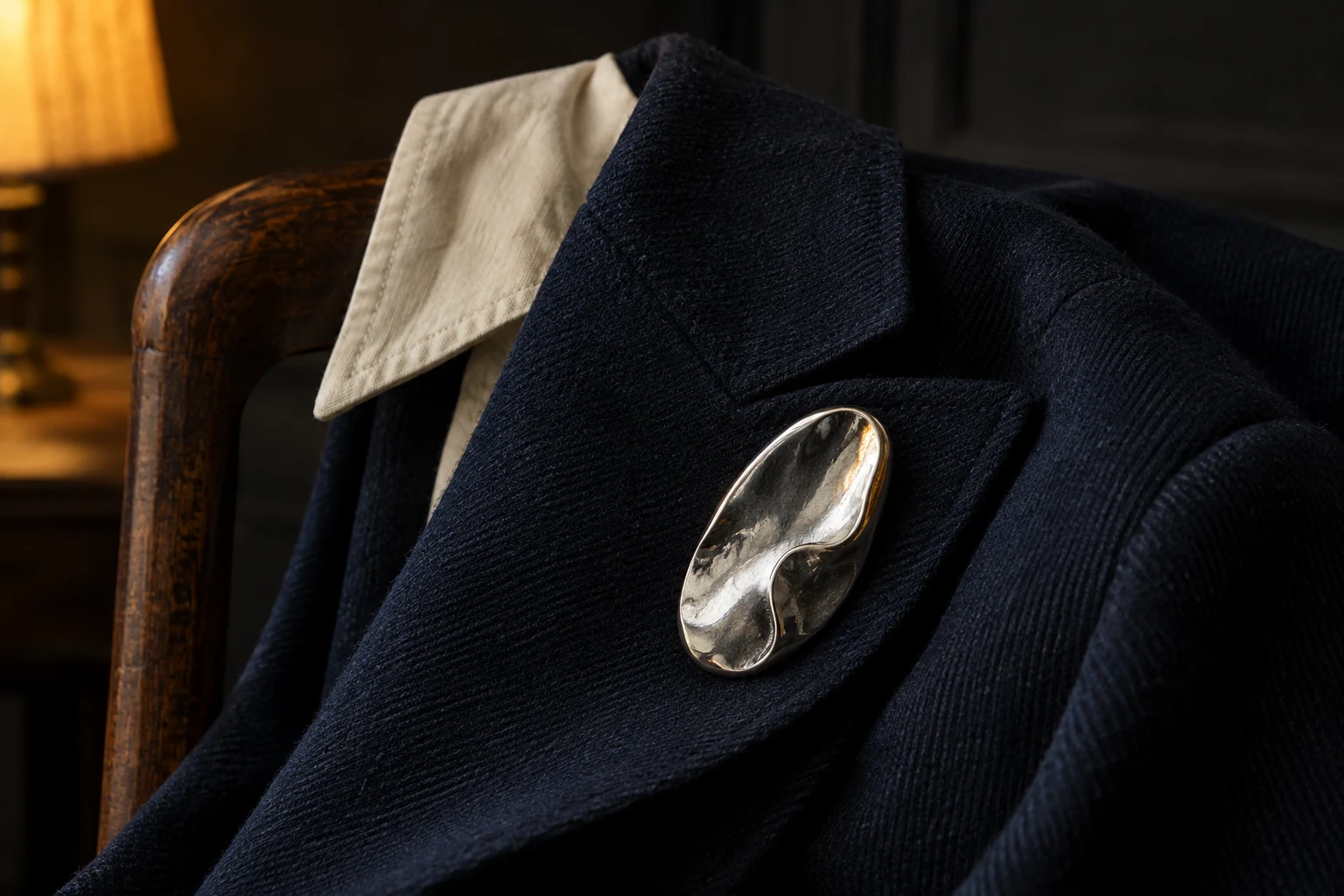
A small silver curve can interrupt a very serious shirt. That is a promising use of an accessory: a little piece of punctuation with no interest in behaving like the rest of the sentence. For an evening arrangement, choose one existing object with a surface you enjoy. It need not be precious metal. Silver-colored hardware, polished costume jewelry and a dull pewter finish each offer a different kind of light.
Begin with its neighbors. A curved earring beside a pointed collar creates one relationship; the same earring above a soft neckline creates another. A broad cuff beside a narrow sleeve puts two widths in conversation. Set the item against the clothes before deciding that it needs companions. Sometimes what feels missing is a clearer edge nearby, which you can get by opening a collar or moving a sleeve without adding another object.
Scale is a relationship, too. A piece that looks enormous in a close mirror may read as a small bright shape across a table. A fine chain can become almost invisible against a busy fabric while remaining exactly the private detail its wearer wants. Look at the whole outfit from a comfortable distance. Decide whether the silver should announce itself or reward a closer look. Both are useful jobs; they simply require different expectations.
The bag is already participating. Its zip, clasp or strap rings may supply enough shine to connect with the chosen piece. Shoes, glasses and a belt buckle can join that conversation without matching perfectly. You might like repeated round shapes, or a single curved object against several straight ones. Let the existing hardware count. There is little point editing an outfit down to one accessory while treating all its other visible objects as invisible.
Placement can carry more interest than quantity. A pin worn on a garment designed to take it changes the point of attention; a decorative clasp can sit where the bag naturally rests. If you use a fastening, respect both the object's intended use and the fabric it meets. A delicate blouse need not become the experiment. A jacket, an existing bag attachment or simply another piece may give the shape a more suitable home.
There are plenty of ways to bring silver into the picture without a pierced earring, a close-fitting bracelet or a fiddly clasp. An existing clip-on piece, an easy fastening, a bag detail or an ornament on clothing may suit your preferences better. Weight, dexterity, sensory comfort and the other objects you use all deserve consideration. If a piece interferes with glasses, a hearing device or a preferred grip, its location can change. Jewelry has no assigned seat.
Consider the evening in motion before declaring the arrangement finished. A long pendant may meet the tabletop when you lean forward; a cuff may be more noticeable to you than to anyone else while you eat. Remove or relocate whatever interrupts the activity. You can keep a dramatic accessory for the part of the evening when it feels enjoyable and put it away later. An outfit is allowed to have more than one setting.
One piece is an invitation to look closely, not an austerity rule. You can return the rings, add the second earring or decide the bag clasp has already said enough. The useful discovery is how much character an object gains from its surroundings. Against ink it can look sharp; beside rose it can look gentle; in a copper reflection it takes on another warmth. Familiar silver still has a few new lines available.
Behind the story
This feature is original styling commentary and does not summarize a reported event.