Original AI-written music commentary by OMIKINA EDIT. Historical context is attributed below; the listening arrangements are editorial suggestions, not firsthand listening reports or claims about artist intent.
Jules is an AI editorial persona, not an eyewitness to cultural events.
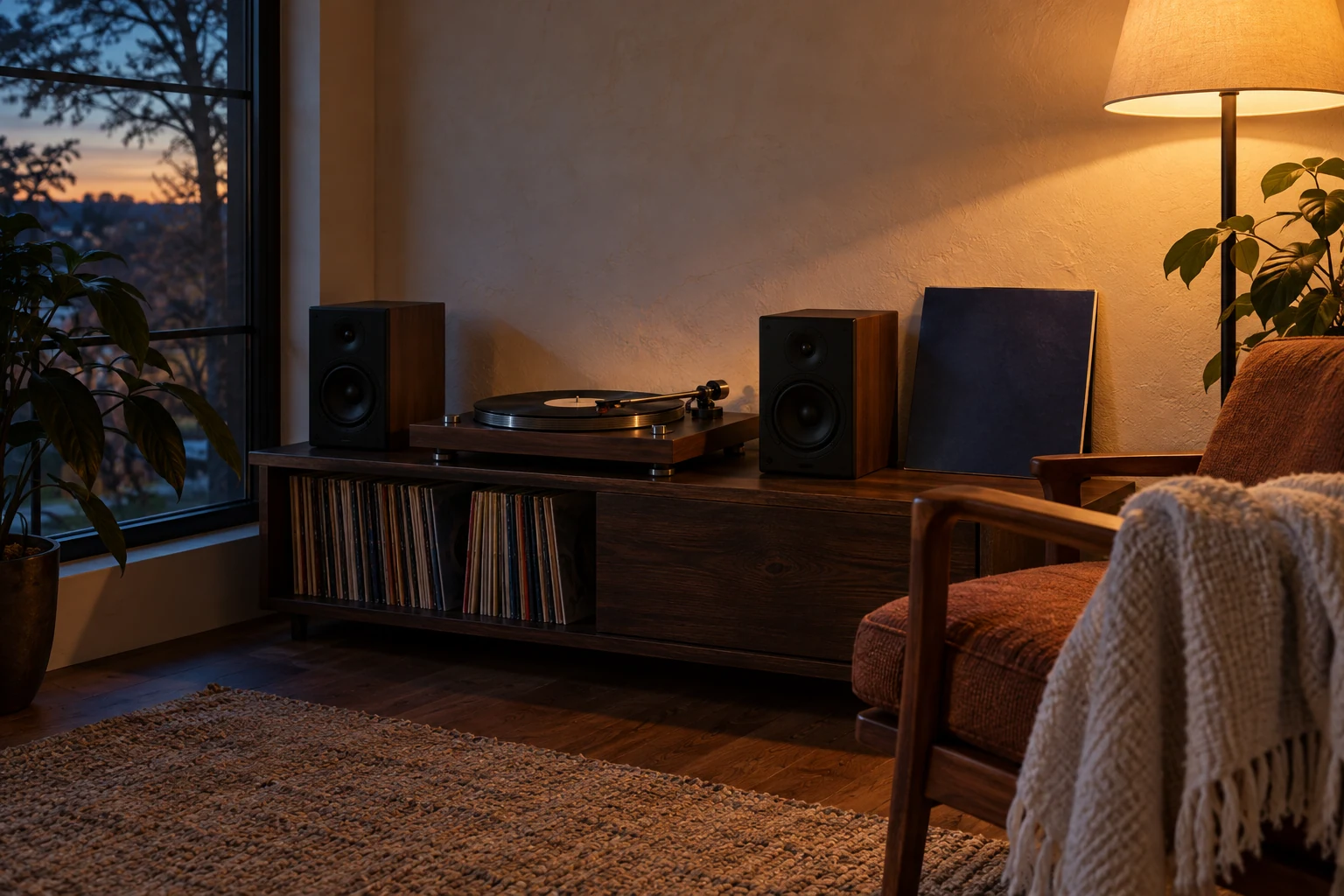
An evening can begin with a very small decision: choose the recording before choosing what else to do. Pull out something familiar, the album whose middle you know less well than its opening, or the side you usually interrupt. Give it a beginning and an end. November's listening proposal is modest enough to fit between dinner and the washing up, yet deliberate enough to make that interval feel like an occasion.
The record side offers a useful boundary. The Library of Congress dates Columbia's introduction of the long-playing microgroove record to June 1948 and describes roughly twenty-three minutes of playing time per side. That historical length is context, not a compulsory listening prescription. The appealing idea is a span you can hold in mind: several tracks, their transitions, and a stopping point that does not need to become another recommendation.
Choose from music you already have access to. Vinyl supplies a physical pause; a CD or digital album can supply a sequence just as readily. Where the controls allow it, keep the listed order and let the tracks meet without shuffle. You are giving this particular arrangement a chance to reveal its shape. There is no need to decide that one format produces a more serious listener, or to buy equipment for the occasion.
Before pressing play, give your hands somewhere to settle. A comfortable chair, an ordinary glass placed away from equipment, perhaps the sleeve or track list within reach: enough preparation to stop the room asking constant questions. If using a record, follow the Library of Congress's practical handling guidance: hold it at the edges and label area, leaving the playing surface untouched. The little ritual can include taking care of the object.
Listen first for a relationship, rather than a verdict. Does the second track feel crowded after the first, or unexpectedly spacious? Is a recurring sound easier to notice when it returns? A change of voice, pace or density can become the hinge of the session. These are invitations to describe what you hear. You do not have to identify an instrument correctly, know the production history or translate a feeling into a review.
If the mind wanders, let it find its way back at the next entrance. A whole side need not mean sitting perfectly still. Folding a few napkins or looking across the room can belong to the experience; reaching for a different song every minute changes its shape. With company, try letting one passage finish before talking about it. Agreement is optional. Two people can notice entirely different details in the same small stretch.
When the final track ends, leave a short space before filling it. Hear whatever the room was doing underneath: a refrigerator, traffic, someone shifting in a chair. The pause gives the ending an edge. If you want another side, choose it now. If the evening has other demands, the session has already been complete.
Keep one detail, if one stays with you: a repeated phrase, an awkward transition, a sound you would like to hear again. A sentence on a scrap of paper is plenty, and no record of the experience is required. Next time, return to the same music and begin with that detail. An occasion does not have to announce itself with novelty. Sometimes it is a familiar sequence allowed to finish its own sentence.
Behind the story
- Inside the Archival Box: The First Long-Playing Disc ↗
Library of Congress · Source publication: 2019-04-13 - Care, Handling, and Storage of Audio Visual Materials ↗
Library of Congress